

Have you ever ever been satisfied that you just keep in mind being a child? A second in a crib, or the style of a primary birthday cake?
Chances are high, these reminiscences aren’t actual. A long time of analysis recommend that most individuals can not recall private experiences from the primary few years of life.
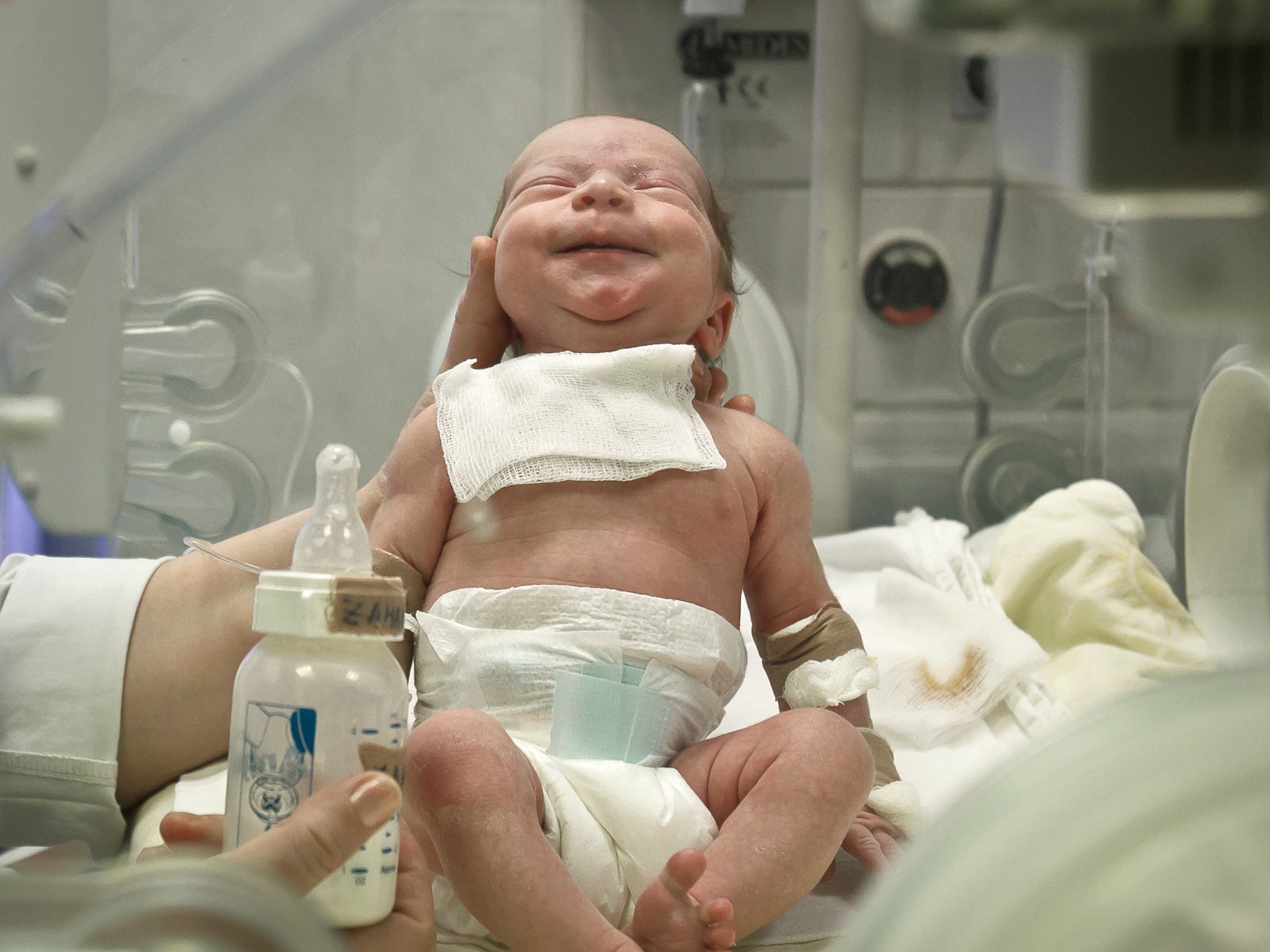
Nevertheless, regardless that we will’t keep in mind being a child, a brand new examine has discovered new proof that infants do take on the earth round them and may additionally start forming reminiscences far sooner than as soon as thought.
How did the examine work and what did it discover?
A examine printed this month in Science by researchers at Yale and Columbia universities has revealed that infants as younger as 12 months previous can type reminiscences through the hippocampus – part of the mind that shops reminiscences in adults, too.
To look at this, the researchers used a specifically tailored mind scan for infants throughout a single session. It allowed them to look at how infants’ brains responded whereas they have been awake and pictures of faces and objects. Dad and mom remained near their infants, which helped maintain them calm and alert.
Within the examine, 26 infants aged 4 to 25 months have been proven a collection of pictures. It was discovered that if a child’s hippocampus was extra lively the primary time they noticed a specific picture, they might have a look at the identical picture for longer when it reappeared a short while later, subsequent to a brand new one – suggesting they recognised it.
“Our outcomes recommend that infants’ brains have the capability for forming reminiscences – however how long-lasting these reminiscences are continues to be an open query,” stated Tristan Yates, a postdoctoral analysis scientist within the division of psychology at Columbia College and lead writer of the examine.
That is the primary time scientists have instantly noticed how a reminiscence begins to take form in an awake child’s mind. Earlier research relied on oblique observations, resembling watching whether or not infants reacted to one thing acquainted. This time, nevertheless, researchers noticed mind exercise linked to particular reminiscences as they type in actual time.
Most previous mind exercise research have been achieved whereas infants have been asleep, which restricted what researchers might find out about aware memory-building.
What does this inform us about youth reminiscences?
The findings recommend that episodic reminiscence – the sort of reminiscence that helps us keep in mind particular occasions and the context by which they befell – begins to develop sooner than scientists beforehand believed.
Till lately, it was extensively believed that this kind of reminiscence didn’t start to type till effectively after a child’s first birthday, usually round 18 to 24 months. Though the findings from the Science examine have been strongest in infants older than 12 months, the outcomes have been noticed in a lot youthful infants as effectively.
So, at what age will we begin making reminiscences?
It’s now understood that infants start forming restricted varieties of reminiscence when they’re as younger as two or three months. These embrace implicit reminiscences (resembling motor abilities) and statistical studying, which helps infants detect patterns in language, faces and routines.
Nevertheless, episodic reminiscence, which permits us to recall particular occasions in addition to the place and after they occurred, takes longer to develop and requires the maturation of the hippocampus.
In keeping with Cristina Maria Alberini, professor of neural science at New York College, the interval in infancy when the hippocampus is creating its means to type and retailer reminiscences could also be “crucial”. This window may very well be vital not just for reminiscence but additionally has “nice implications for psychological well being and reminiscence or cognitive issues”, she added.
Recollections fashioned in early childhood don’t usually final very lengthy, it’s believed, which could clarify why we will’t keep in mind them later in life. In an ongoing examine on the Max Planck Institute for Human Improvement in Germany, 20-month-old toddlers were able to remember which toy was by which room for as much as six months, whereas youthful kids retained the reminiscence for under about one month.
Why can’t we keep in mind something from infancy?
People’ near-universal incapacity to recall private experiences from earlier than the age of about three is a phenomenon often called “childish amnesia”.
For many years, scientists believed this occurs just because infants’ brains have been too immature to retailer episodic reminiscences.
However the Science examine has proven that infants do certainly type reminiscences. The thriller is why these reminiscences turn out to be inaccessible as we get older.
One explanation, scientists say, is that infants’ brains bear speedy neurogenesis – the fast-paced creation of latest neurons within the mind. This speedy development may disrupt or “write over” current reminiscences. In animal research, when scientists slowed this course of in child mice, the mice have been capable of retain reminiscences for much longer – just like grownup mice.
There may be additionally a speculation that episodic reminiscence requires language to explain them and a “sense of self” to narrate to them. Since these abilities don’t totally develop till round age three or 4, the mind won’t but have the instruments to organise and retrieve reminiscences in the way in which adults do.
Some researchers additionally suppose the method of forgetting may serve a developmental goal. By letting go of particular early experiences, the mind may be higher capable of give attention to constructing common information – to know how the world works, for instance – with out being distracted by detailed reminiscences which not serve a goal.
Can some individuals keep in mind occasions from infancy?
Some individuals declare they will keep in mind being a child, however there isn’t any proof that what they describe are real episodic reminiscences.
In keeping with the Yale and Columbia examine, this perception usually stems from a psychological course of referred to as “supply misattribution”.
Folks could keep in mind data, resembling that they cried throughout their first haircut, however not the place that data got here from. They may unconsciously attribute the reminiscence to non-public expertise when it really got here from a photograph, household tales or a dad or mum’s retelling. Over time, the road between “actual” and “reconstructed” has blurred.
Analysis exhibits that early household tales, frequent photograph viewings or cultural emphasis on early improvement can all contribute to this phenomenon.
Yale is presently conducting a brand new examine by which dad and mom will movie their infants commonly, both with their telephones angled from the infant’s viewpoint or by utilizing head-mounted cameras on toddlers. Later, as the youngsters get older, the researchers will present the youngsters these previous movies to see in the event that they recognise the experiences, primarily by monitoring mind exercise, to learn how lengthy early reminiscences can final, Yates advised Al Jazeera.
May early reminiscences be recalled later in life?
There may be debate about whether or not youth reminiscences are utterly erased or have merely turn out to be inaccessible and will ultimately be recovered.
Yates stated that whereas the most recent examine doesn’t reply this query, preliminary proof from different analysis on the Yale lab exhibits that youth reminiscences could be recalled in early childhood, however not later childhood.
“I feel the concept at the least a few of our youth reminiscences could exist in some type in our brains as adults is fascinating,” she stated.
Research of grownup rodents have proven that early reminiscences could be introduced again by means of approaches resembling optogenetics – activating the precise mind cells that are believed to retailer these reminiscences. This works by figuring out the mind cells concerned in forming a reminiscence, then later utilizing mild to reactivate those self same cells, inflicting the animal to recall the reminiscence.
Methods resembling optogenetics can not but be utilized in people, however the examine of rodents means that the method by which we retrieve reminiscences is the place the difficulty lies, quite than whether or not the reminiscences exist in any respect, based on Paul Frankland, senior scientist at The Hospital for Sick Youngsters in Toronto.
“Maybe there are pure circumstances the place these youth reminiscences turn out to be extra accessible,” he added.
Psychoanalysts resembling Sigmund Freud believed that early childhood reminiscences aren’t misplaced however buried deep within the unconscious, and that psychotherapy may assist carry them to the floor by altering psychological states.
Nevertheless, Frankland stated that it is a “controversial space” as “it’s tough to confirm the veracity of recovered reminiscences”.
